Cloud
Avionic and IPad Connection
GTX 345
- GTX 345 -> Bluetooth -> IPad
GNC 355
- GNC 355 -> Bluetooth -> IPad
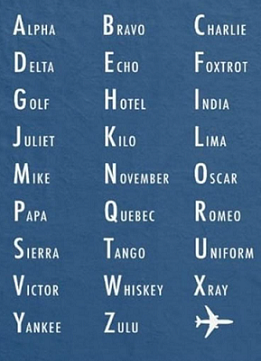
Weather
METAR / TAF
- SMS to 358782 to get METAR. e.g.,MT CYOO PT
Canada
USA
Dewpoint
- When dewpoint spread is 3°C or less, you can anticipate fog.
Altitude
Density Altitude
- It is the pressure altitude corrected for temperature.
- Impacts of High Density Altitude
| ✪Area | ✪Impact |
| Takeoff Distance |
|
| Rate of Climb |
|
| True Airspeed (TAS) |
|
| Stall Speed |
|
| Landing Distance |
|
| Engine Power |
|
| Propeller Efficiency |
|
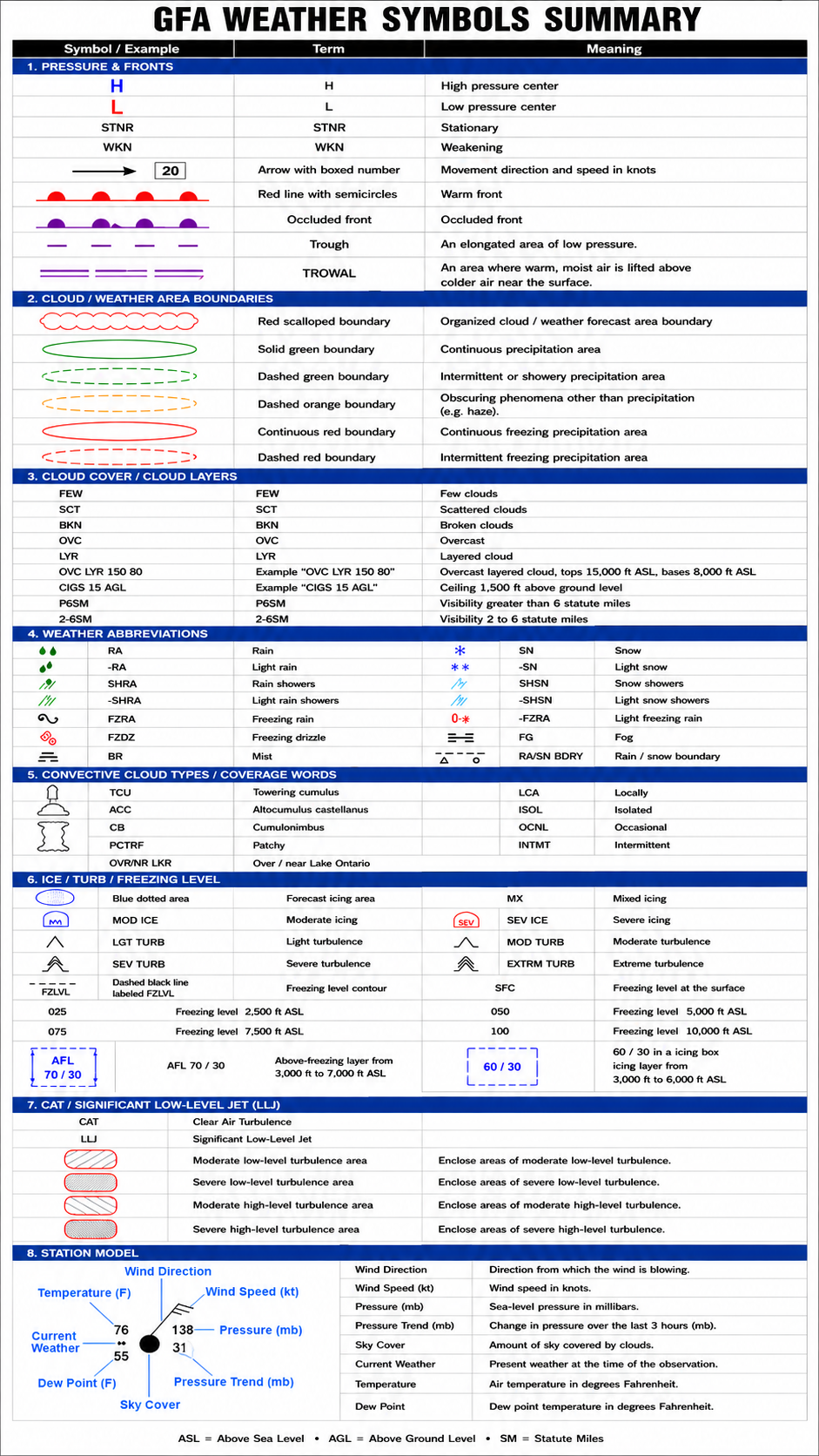
Taxi
While Taxi
- Making a left turn, the ball (i.e. inclinometer) should move to the right
- Making a right turn, the ball (i.e. inclinometer) should move to the left
Radio Frequency & Squawk
Radio Frequency
| 121.50 |
|
| 126.7 |
|
| 133.40 |
|
| 123.15 |
|
| 123.45 |
|
| 123.3 / 123.5 |
|
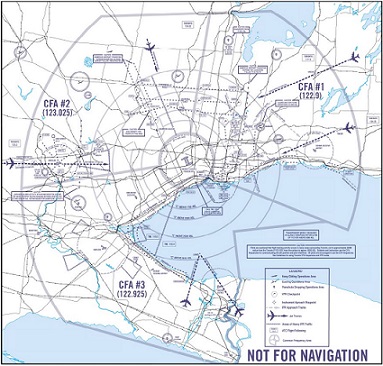
| 122.9 |
|
| 123.025 |
|
| 122.925 |
|
VFR Squawk Code
| 1200 |
|
| 1400 |
|
IFR Squawk Code
| 1000 |
|
| 2000 |
|
Other Squawk Code
| 7700 |
|
| 7600 |
|
| 7500 |
|
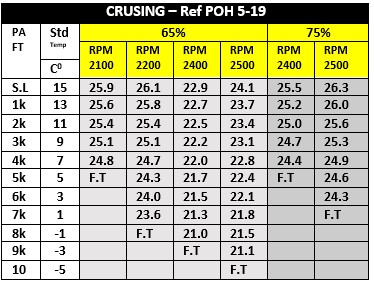
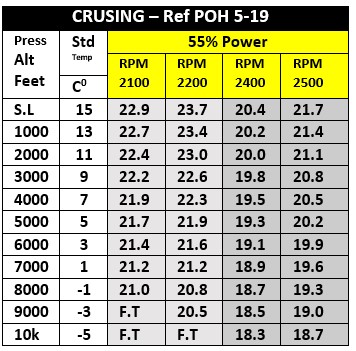
Power Setting for 1979 Piper Arrow IV
Take-off:
- Prop: Fine (Full) Mainfold: Full
- Once Altitude positive / in claiming: Prop: 2500RPM Mainfold: 25inch
Cruise Power Setting - TAS:
- TAS ≈ IAS + (IAS × Altitude in thousands × 0.02)
- Verified Cruise Performance @ 75% Power (ISA, Best Power Mixture)
- RPM:2500
- Weight: Max gross weight (2,750 lbs)
- Configuration: Clean (Gear up, Flaps up, Trim - Level Flight, Mixture - Leaned for best power)
- Fuel Mixture: Best power mixture (not leaned for economy)
- Temperature: Standard day (ISA)
General:
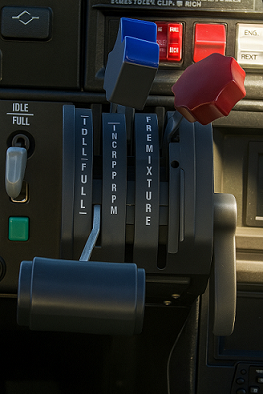
- ▼ Reduce Power : Manifold then Prop.
- ▲ Increase Power: Prop then Manifold.
- Prop is Top - The blue level (prop) is always top of the black lever (manifold pressure).
Cruising Altitude Rule
- Odd: For magnetic headings between 0° and 179° (eastbound):Starting at 3000'AGL + 500'
- Even:For magnetic headings between 180° and 359° (westbound):Starting at 4000'AGL + 500'
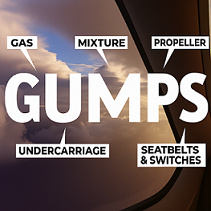
Final Approach - GUMPS
Landing:
| G |
|
| U |
|
| M |
|
| P |
|
| S |
|
| C |
|
Piper Arrow IV Glide Performance
- For every 1,000 feet AGL, the aircraft glides 10,000 feet forward (i.e., 10,000 ft horizontal distance)
- 1 nautical mile = 6,076.12 feet
- For every 1,000 feet AGL, a Piper Arrow IV (with 10:1 glide ratio) can glide approximately,1.645 nautical miles
| Altitude AGL ft | Glide Distance (NM) |
| 1000 |
|
| 2000 |
|
| 3000 |
|
| 4000 |
|
| 5000 |
|
| 6000 |
|
| 7000 |
|
| 8000 |
|
| 9000 |
|
TIPS
When a aircraft comes right at you, what do you do as a pilot?
| Right-of-Way Rules: |
|
| Maintain Altitude: |
|
| Communication: |
|
| Visual Observations: |
|
| Collision Avoidance Maneuvers: |
|
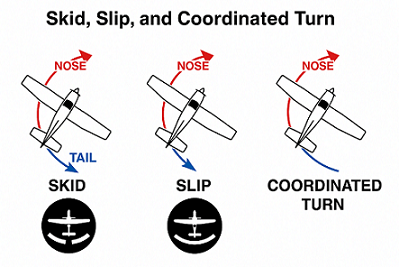
Skid (and Slip)
- A skid happens during a turn when the tail is swung too far outside the turn - i.e., too much rudder input.
- Cause: Too much rudder for the bank angle
- Effect: The aircraft slides outward from the turn path - dangerous in stalls.
- A slip is the opposite: not enough rudder - aircraft inward
| Term | Axis/type | Caused By | Desc | Risk |
| Yaw | Vertical axis rotation | Rudder input | Nose swings left/right | Needed for coordination |
| Skid | Side force in turn | Too much rudder | Tail swung outward — plane slides outward | Can cause spin in stall |
| Slip | Side force in turn | Not enough rudder | Plane slides inward during a bank | Used in crosswind landings |
Memory Aid:
- Yaw = Where the nose is pointing
- Skid/slip = whether your aircraft is balanced in the turn or sliding sideways
Documents
On-Board Docs:
- Download ☼ Piper Arrow IV Checklist
- Download ☼ POH - Pilot Operating Handbook
- Download ☼ CFS
- Download ☼ Maintenance Manual
- Download ☼ Informational Manual
- Download ☼ Airport, Frequency...
- Download ☼ Piper Parts Catelog (Not required to be on-board)
Weather:
- Download ☼ NOTAM
- Download ☼ My Collection of Weather forecast Symbols
- Download ☼ Weather Guide Symbols
IFR:
- Download ☼ Gap Gen
- Download ☼ AIM
- Download ☼ Designated Airspace Handbook
- Download ☼ IFR Phraseology
Manuals:
URLs
On-Board Docs:
Weather:
- METAR
- GFA - Graphical Area Forecast
- Nav Canada Aviation Weather: CA WX Brief:1–866–992–7433
- Nav Canada Aviation Weather
- USA Weather Forcast
Charts:
Tools:
Current Avionic
Current Avionic - 1979 Piper Arrow IV PA28RT-201
- 350C Radio Panel

Night Currency
Canadian Rule (CARs 401.05(2)) – Recency Requirements:
-
To carry passengers at night, the pilot must have:
- Completed at least 5 takeoffs and 5 landings at night within 6 months
- In the same category and class of aircraft
- If your takeoff and/or landing occurred before the end of civil twilight, they don’t count toward maintaining night currency.
-
Logging as Night:
- According to CARs 101.01, Night is defined as: The time between the end of evening civil twilight and the beginning of morning civil twilight.
- 30 minutes after sunset is NOT yet night. Civil twilight typically lasts about 30 to 40 minutes after sunset, depending on location and season.
How to Find the Exact Time:
-
NAV CANADA Weather Services
- Use the GFA Tool or the NAV CANADA AWWS website.
- Look up “Sunrise/Sunset/Civil Twilight” data by airport.
-
ForeFlight / Aviation Apps
- Apps like ForeFlight or SkyDemon show:
- Sunset, End of civil twilight, Automatically adjust based on location and date.
- National Research Council of Canada:
✍️Summary of What to Log:
| Time of Flight | What You Log | Counts Toward Night Currency? |
| 30 min after sunset | Day (not night) | ❌ No – civil twilight not over |
| After civil twilight | Night time | ✅ Yes – log as night + counts |
VFR Arrivals at Uncontrolled Aerodromes
The legal requirement is found in CAR 602.96(3) of the Canadian Aviation Regulations (CARs).:
- observe the traffic circuit at the aerodrome for the purpose of avoiding collision;
- conform to or avoid the traffic circuit formed by other aircraft in operation;
- make all turns to the left when approaching for landing and after takeoff unless otherwise specified in the CFS or by ATC;
- where practicable, land and take off into the wind, unless otherwise authorized by ATC;
- maintain a listening watch on the appropriate frequency; and
- announce their intentions on the appropriate frequency when operating within an MF or ATF area.
⚠️ What is not legally required:
- Overhead join
- Dead side descent
- Mid-downwind 45° joins
🧠 Bottom Line for Legal Compliance: As long as you:
- Avoid conflicts,
- Conform to the circuit (or stay out of it),
- Make standard left-hand turns,
- Make appropriate radio calls on 123.2 MHz
You are legally compliant with CAR 602.96(3) — even if you join on base or straight-in.
✅ VFR Arrivals – Legal Requirements vs. Best Practices (Canada)
| Aspect | Legal Requirement (CAR 602.96) | Best Practice (TC AIM RAC 4.5.2 |
| Circuit direction | Must make left turns, unless CFS says otherwise | Same – left-hand circuits unless specified |
| Conforming to circuit | Must conform to or avoid existing circuit | Conform using a standard entry (overhead preferred) |
| Avoiding conflict | Must observe traffic and avoid collision | Same – ensure visual and radio situational awareness |
| Altitude for join | No specific rule on join altitude | Overfly aerodrome at 500' above circuit (i.e., 2,000' ASL for CZBA) |
| Type of join | Any safe entry permitted (e.g., base, straight-in, mid-downwind) | Recommended: overhead join → dead side descent → downwind |
| Radio communication | Must maintain listening watch and broadcast intentions | Same – make calls at 5–10 NM, and at downwind, base, final |
| Landing direction | Must land into wind where practicable | Same |
| Straight-in or base joins | Allowed, if they don’t disrupt circuit traffic | Discouraged, unless you're 100% sure of no conflict |